There’s a moment in every experiment that I’ve come to appreciate more over time. It’s not the result, and it’s not the breakthrough everyone is waiting for. It’s this moment right here—at the very beginning—when everything is still beneath the surface and nothing has revealed itself yet.
That moment has officially arrived.
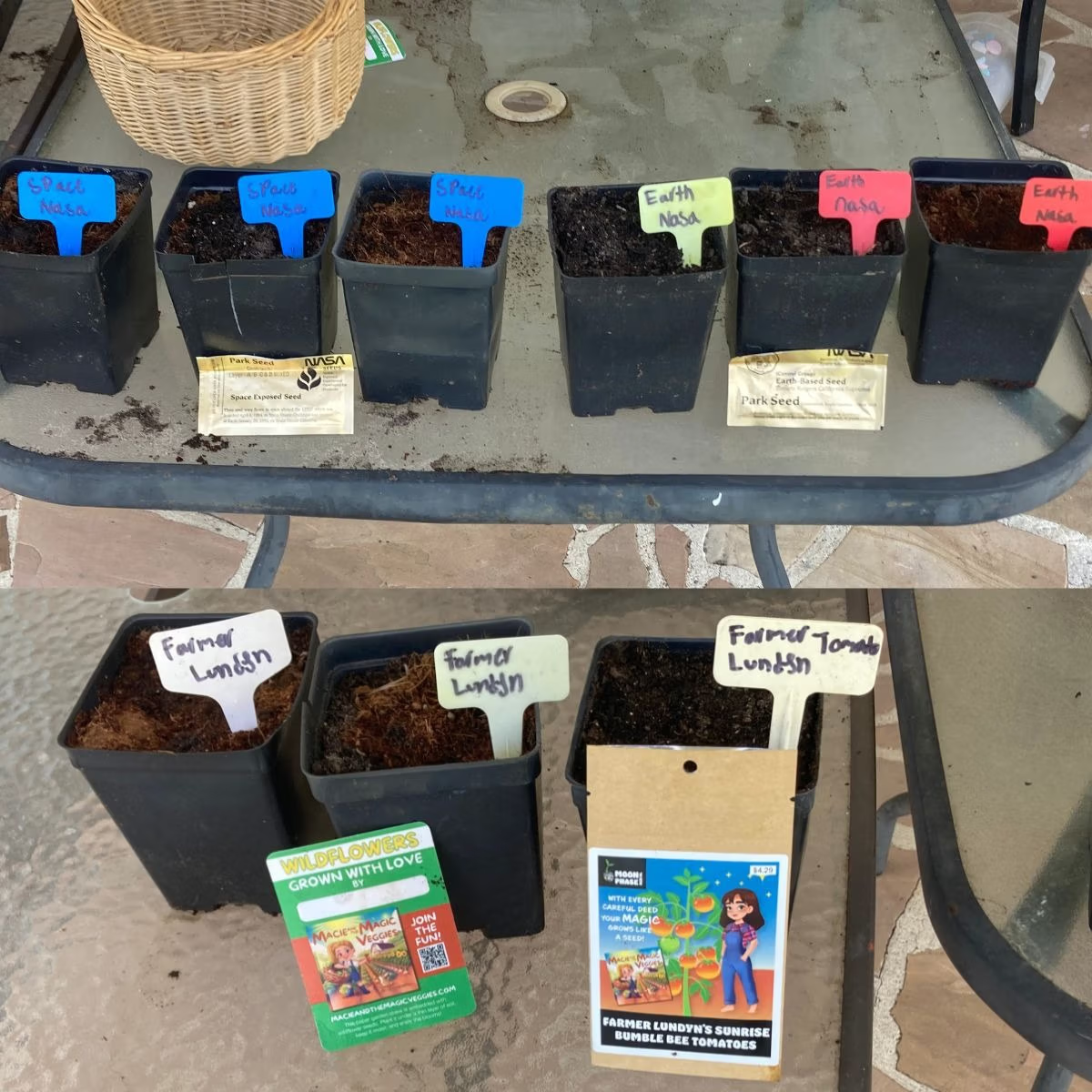
Farmer Lundyn—the real Lundyn who inspired the character in the Macieverse—is now underway with her own version of the NASA SEEDS experiment. In the photos here, you’ll see something that looks simple at first glance: a few pots, fresh soil, and carefully labeled markers identifying what’s been planted. On one side are original tomato seeds from NASA’s historic SEEDS program—seeds that spent six years in space before returning to Earth in 1990. Right alongside them are their Earth-based counterparts, planted at the same time, in the same environment, and given the same care.
And now, we wait.
What makes this even more interesting is that she didn’t stop there. Alongside the NASA seeds, she planted her own Farmer Lundyn Sunrise Bumble Bee Tomato Seeds and added a few wildflowers into the mix. Not as a backup plan or just for comparison, but as part of the process itself. Because sometimes the most meaningful experiments are about expanding the opportunities to observe, compare, and learn.
This is where the story behind Macie and the Magic Rocket Seeds begins to take on a new dimension. What started as an idea on the page is now something we can follow in real time. Something we can watch develop. Something that invites us—not just to read about curiosity—but to experience it.
And that connection matters.
Because this experiment is tied directly to something bigger. It reflects the spirit behind the gift that made it possible, as well as the mission behind Access to Fresh. At its core, this isn’t just about growing seeds. It’s about creating moments where curiosity can take root. Moments where kids—and really, all of us—are encouraged to ask a simple question: What will happen?
There’s no guarantee here. No perfectly controlled environment. No script that tells us how this will unfold. Just real soil, real seeds, and a willingness to observe what comes next. In many ways, that’s what makes it meaningful.
Back in 1990, the original SEEDS program was designed to give students the opportunity to participate in real science. Not just to study it, but to experience it. That idea still holds up today. Whether we’re talking about growing food in space or growing food in our own communities, the underlying questions haven’t changed all that much.
Now, here we are in 2026, with a new generation stepping into that same spirit of exploration. The tools may be different. The context may have evolved. But the curiosity—the willingness to plant something and see what happens—remains exactly the same.
Right now, everything is still beneath the surface. There’s nothing to see yet. And maybe that’s the best part. Because this is where curiosity lives. This is where learning begins.
We’ll keep sharing what happens next.
For now, we watch. We wonder. And we let the seeds do what they’re meant to do. 🌱🚀
Peter Contardo